A little bit about Sebbies
I’ll try to keep this short, but there are some great articles out there that dive pretty deep into the history, I’ve cited my sources at the bottom of the blog for you in case you are interested. But now without further ado let’s dive in!
Let’s start with the history of the breed
Their exact origin has remained a mystery, though many sources point to regions around the Black Sea, with the breed named after the Russian city Sevastopol. From there, the birds were first documented in press reports in Britain in the 1860s at a poultry show. Sebastopol geese then made it to the United States by at least the early 1920s, though the exact timeline isn't known. They were recognized by the American Poultry Association Standard of Perfection in 1938.
Plumage
Initially, the breed was known for having two different forms of plumage: one smooth-breasted, with trailing feathers similar to the Crimean imports, and the other curly all over its entire body except for the head and neck. Today, we still see both the smooth and curly breasted Sebastopol, with curly being much more sought after. Below is a look at both types of plumage in my own flock:
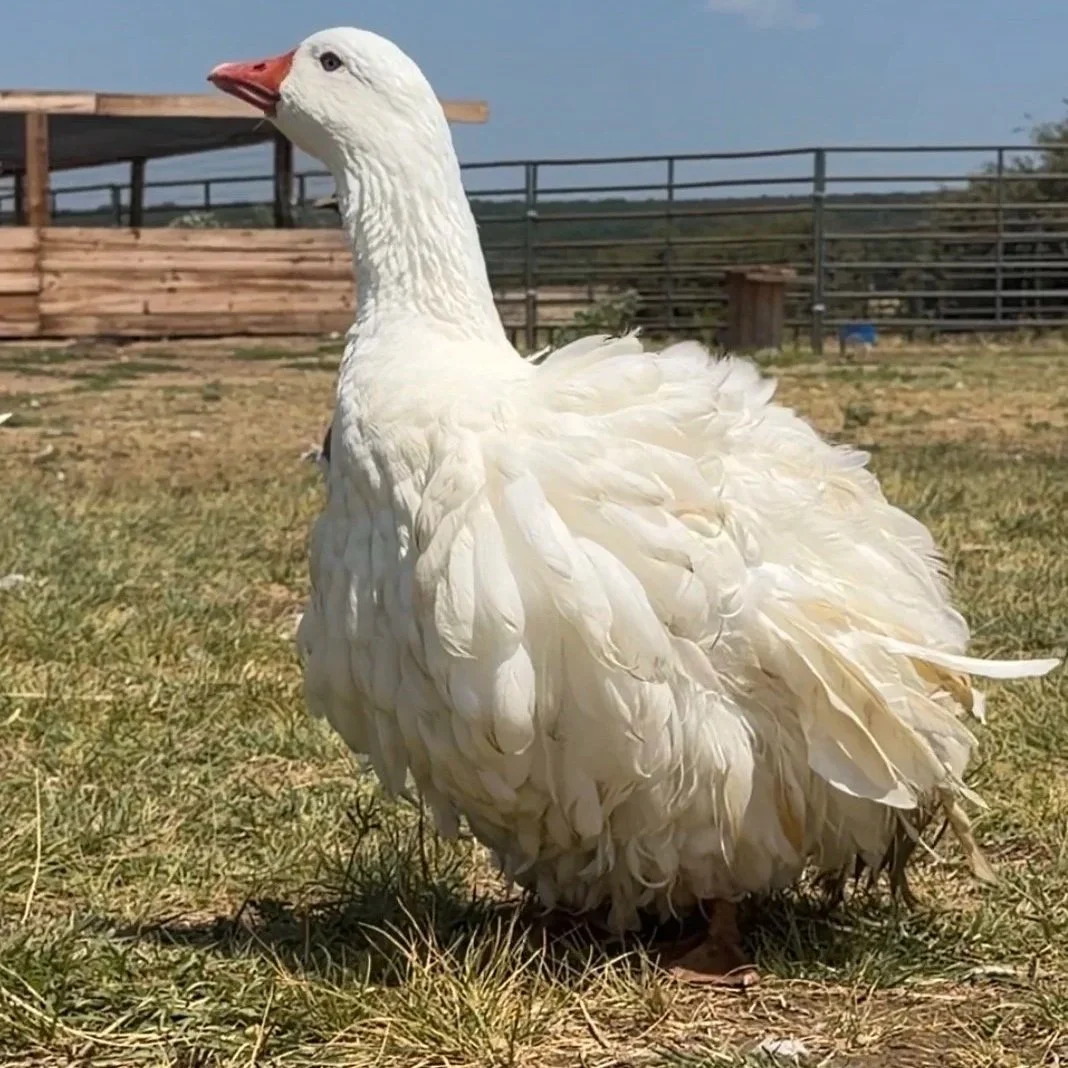
Curly Breasted Sebastopol
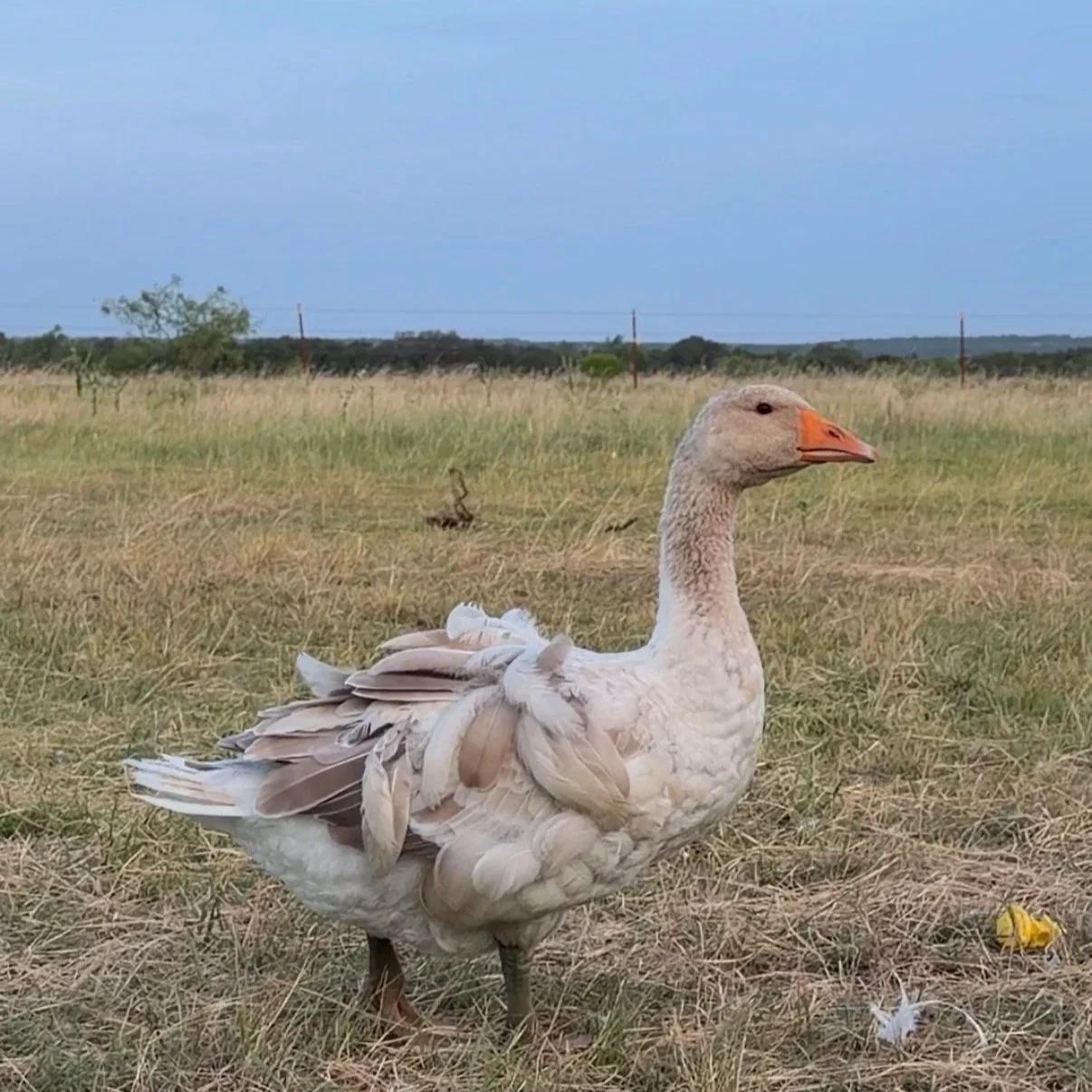
Buff Smooth Breasted Sebastopol
As you see above, Sebastopol geese can come in multiple colors. Currently, white is the only color recognized by the APA. But there are also gray, blue, buff, lavender, and lilac — plus saddleback variations of these colors.
I could go on and on about these birds, but I’ll stop there for now.
Sources:
